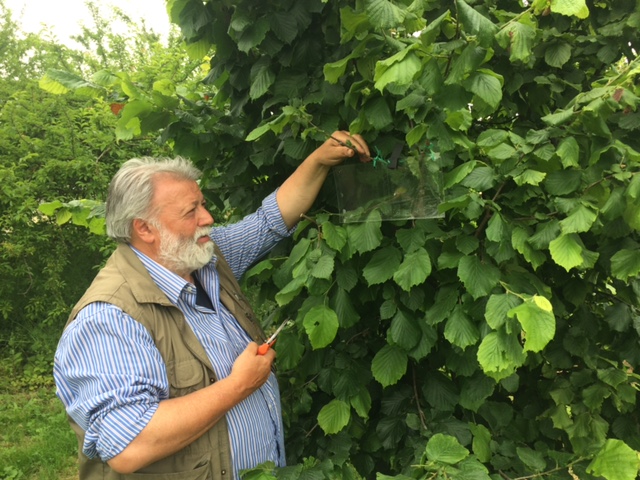

The flowering of the hazelnut represents a complex and peculiar biological process, which differs significantly from that of many other fruit tree species. In hazelnuts, pollination and fertilization do not occur simultaneously, but at distinct times, making the reproductive dynamics particularly delicate and highly dependent on both genetic and environmental factors.
Hazelnut is a monoecious plant, characterized by the presence of separate male and female inflorescences on the same plant. At the same time, it is self-incompatible: self-fertilization is biologically prevented, and fruit production occurs exclusively through pollen from genetically compatible individuals.
HOW DOES POLLINATION OCCUR?

Historically, this crucial role was performed by wild hazelnuts, which for centuries ensured a high availability of compatible pollen. Their great genetic variability, resulting from seed propagation, guaranteed (and still guarantees, where present) a rich pollen diversity: each hazelnut has a certain mother but a genetically unknown father.
This widespread genetic heritage in traditional agricultural landscapes allowed efficient and stable fertilization over time, even in the absence of targeted orchard planning.
With the advent of intensive hazelnut cultivation, however, the environmental context has changed profoundly. Progressive deforestation, reduction of natural areas, and, above all, the elimination of hedgerows and field margins have led to a drastic decrease in sources of compatible pollen. Consequently, the problem of pollination deficiency has become increasingly evident, with direct repercussions on productivity and yield stability.

WHEN DOES FLOWERING BEGIN?

Flower bud differentiation occurs in late June to early July. The plant self-regulates the formation of reproductive buds in July based on its water and nutrient status. Therefore, it is essential to support the plant during this period to ensure proper differentiation of reproductive buds for the following year.

Pollen grains captured by the female flower’s stigmas

CHILL REQUIREMENTS

Hazelnut flowering is strongly influenced by winter temperatures. Referring to the Tonda Gentile variety, male flowering requires the accumulation of at least 500 hours below 7 °C, while female flowering has a slightly higher requirement, around 700 hours below the same threshold. Once this “chilling requirement” is met, by late December, Tonda Gentile begins developing male catkins, followed about ten days later by female flowering.


This phenological phase is particularly resilient to climatic stress, as the flowers can tolerate very low temperatures without damage. The female flower, small and inconspicuous, does not attract insect pollinators, and fertilization occurs almost exclusively via wind pollination. Pollen grains carried by the wind settle on the stigma, and thanks to a specialized encapsulating structure, they can withstand harsh temperatures, ensuring fertilization even under severe cold.
WHEN DOES OVULE FERTILIZATION OCCUR?

About three months after pollination, in early April, with rising temperatures, the pollen grain germinates, initiating the growth of the pollen tube, a structure that transports the male gamete to the ovule, which contains the female gamete. Fertilization then occurs, leading to fruit formation around mid-June.


Close-up of the pollen tube


Nutritional imbalances, temperature fluctuations, excessive rainfall causing root asphyxiation, and insufficient sunlight affecting chlorophyll-based photosynthesis are the main causes of failed fruit set, resulting in physiological fruit drop.
After successful fertilization, the fruit begins to enlarge, reaching its maximum development within approximately 15 days.
If you found this topic interesting and want to learn more, write to us or contact us!